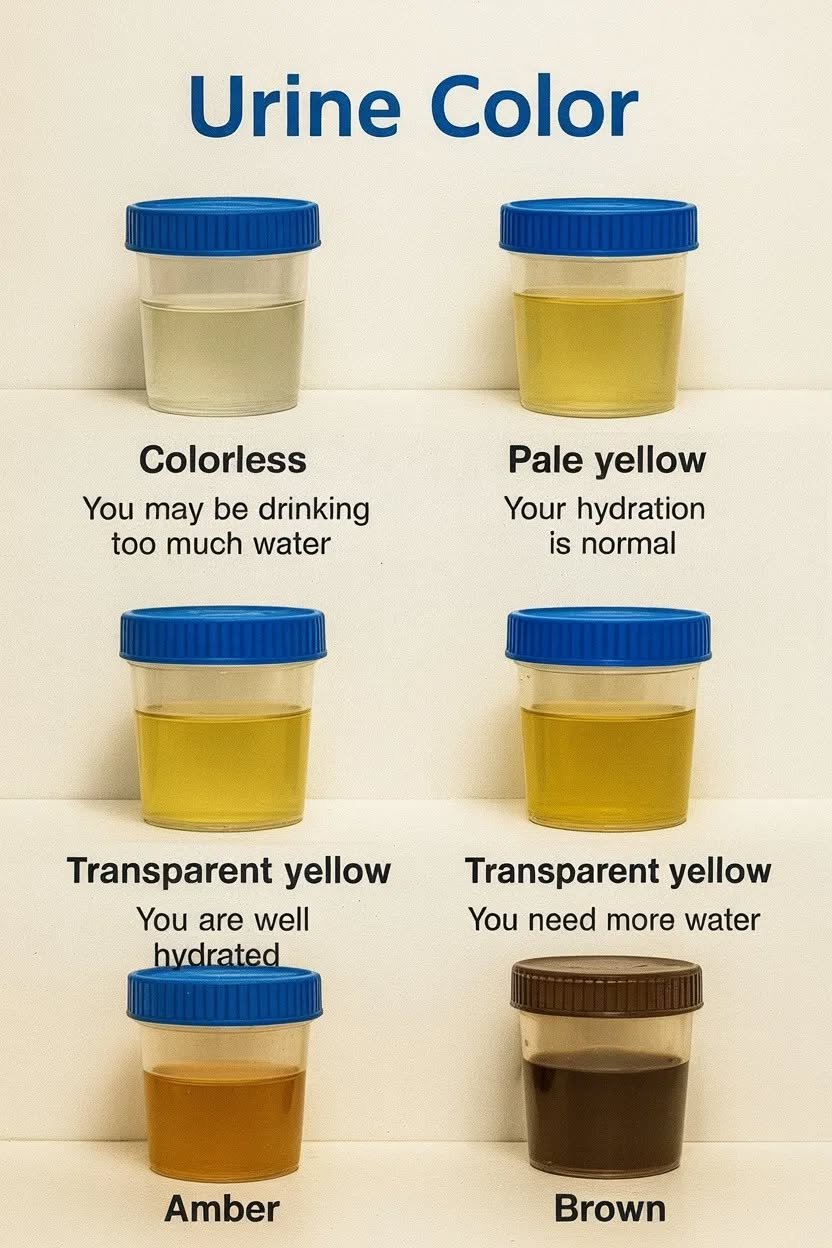
Absolutely! Urine is surprisingly informative about your health—it’s like your body sending color-coded signals 🚦💧. Here’s a practical urine color guide and what it might mean:
💛 Urine Color Guide: What Your Pee Can Tell You
| Color | What it Might Mean | Notes / Action |
|---|---|---|
| Pale yellow / straw | Normal, well-hydrated | Ideal color. Keep drinking water. |
| Transparent / very clear | Possibly overhydrated | Not dangerous, but you may be drinking more than necessary. |
| Dark yellow / amber | Mild dehydration | Drink more water; check for sweating, exercise, or heat. |
| Orange | Dehydration, B vitamins, medications (rifampin, phenazopyridine) | Hydrate; check recent meds. |
| Brown | Severe dehydration, liver disease, some foods (fava beans, rhubarb) | See a doctor if persistent. |
| Pink / red | Blood in urine, beets, berries, some medications | Blood in urine needs prompt medical evaluation; foods may cause harmless tint. |
| Blue / green | Rare medications, dyes, bacterial infection | Usually harmless; consult doctor if persistent. |
| Cloudy / murky | Infection, kidney stones, high phosphate | Often a UTI; see a doctor if accompanied by burning or pain. |
| Foamy / bubbly | Protein in urine, kidney issues | Persistent foam should be checked by a doctor. |
⚡ Tips
-
Hydration affects everything – aim for pale yellow.
-
Sudden changes in urine color that don’t relate to food or meds should be evaluated.
-
Smell matters too – strong ammonia scent can indicate dehydration; sweet/foul odor can indicate infection or diabetes issues.
If you want, I can make a quick, visual “urine rainbow guide” with easy health takeaways so you can check your pee at a glance—it’s like a cheat sheet for your body.