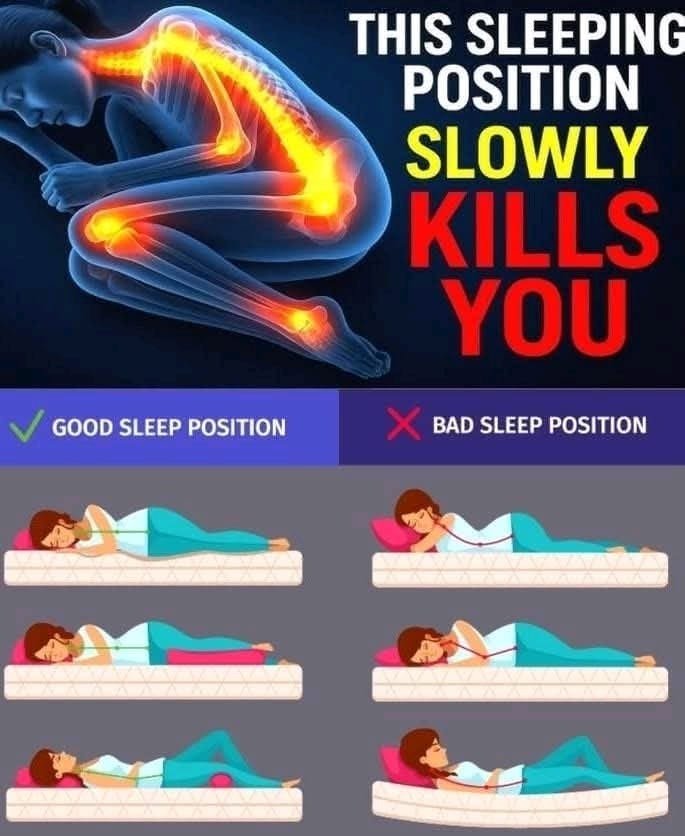
🛌 The Most Dangerous Sleeping Position: Sleeping on Your Stomach (Prone)
Medical research and health specialists consistently point to sleeping on your stomach as one of the least healthy sleep postures for most adults — often described as the worst choice overall.
Why It’s Harmful
1. Poor Spinal Alignment
Sleeping on your stomach forces your spine into an unnatural position that flattens the lumbar curve while your neck is twisted to one side for breathing. This can lead to:
-
Neck strain and stiffness
-
Lower back pain
-
Muscle tension and headaches
All because your head must turn sideways for hours each night.
2. Increased Pressure on Neck and Back
Your cervical spine (neck) and lower back don’t stay neutral in this position, which places extra stress on muscles and vertebrae. This chronic misalignment is linked in analyses to higher rates of morning discomfort and long-term spinal issues.
3. Restricted Breathing and Chest Movement
With your chest pressed against the mattress, it’s harder for lungs to fully expand — making deep breathing more difficult and potentially affecting sleep quality and oxygenation.
4. Pressure on Joints and Nerves
Arms tucked under or beside your body can compress nerves (especially in shoulders and elbows), leading to numbness or tingling upon waking.
🩺 Common Name: “Freefall” or Prone Position
Most sleep specialists, including those cited in expert guidance, advise against this position for chronic sleepers because it’s associated with:
✔ Moderate increases in neck pain
✔ Elevated risk of lower back stiffness
✔ Potential long-term joint and nerve stress
✔ Sub-optimal breathing patterns at night
These issues emerge from how the body must twist and compress to maintain the position.
🤔 What About Other Risky Positions?
While stomach sleeping is widely considered the worst for spinal alignment and structural stress, other sleep postures can be harmful in specific situations:
🔹 ‘T‑rex Position’ (Side Sleeping With Arms Bent)
Even side sleeping — typically healthier — can be problematic if arms are tucked tight, leading to nerve compression and pain.
🔹 Back Sleeping (Supine)
Though generally okay for many people, sleeping flat on your back can worsen:
-
Snoring
-
Obstructive sleep apnea
because gravity can pull soft tissues into the airway.
🛌 Healthier Alternatives (Backed by Sleep Science)
🌙 Side Sleeping (especially left side):
-
Promotes better breathing
-
May reduce acid reflux
-
Often better for spinal alignment
Side sleep with a pillow between your legs to support alignment.
🌙 Back Sleeping (with support):
-
Good for neutral spine if the head and neck are supported
-
Use a pillow under knees and a medium‑firm mattress for best posture
Still can worsen snoring/APO without proper elevation.
🧠 Final Takeaway
Sleeping on your stomach (prone position) is generally considered the most dangerous sleep posture for long‑term health — mainly due to its impact on your spine, neck, breathing, and nervous system. This doesn’t mean one night on your stomach will harm you, but repeatedly sleeping this way over months and years can contribute to chronic discomfort and poorer sleep quality.
If you want, I can help you choose the best sleep position for your specific conditions — like back pain, snoring, or acid reflux — and suggest ways to transition comfortably from a harmful position to a healthier one. Just let me know!